Living Greens & Quiet
Landscapes
Course with Raquel Falk
Material: watercolor
Number of paintings: 8
Course duration: 9 hours
Access: unlimited
What the course is about
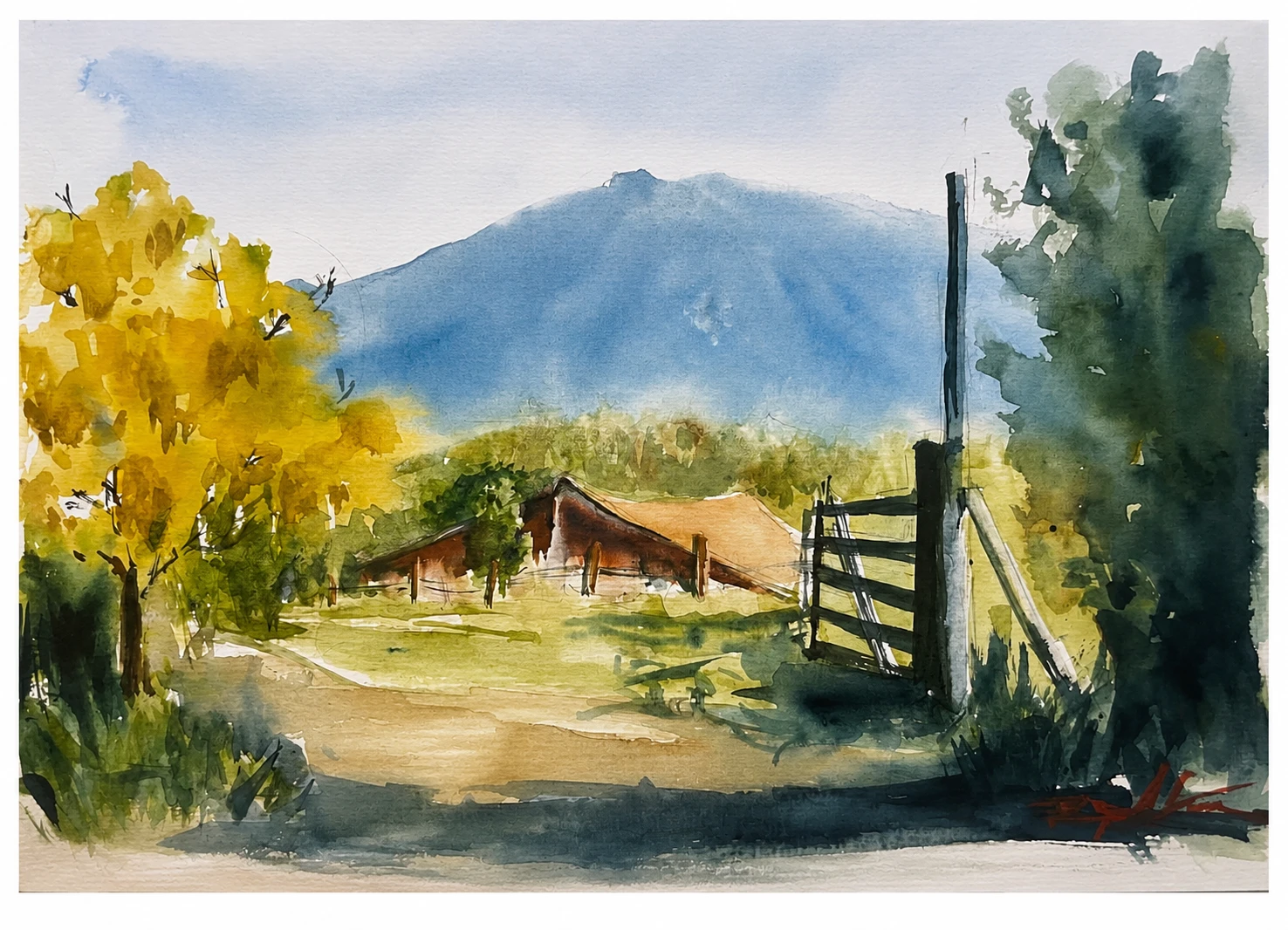
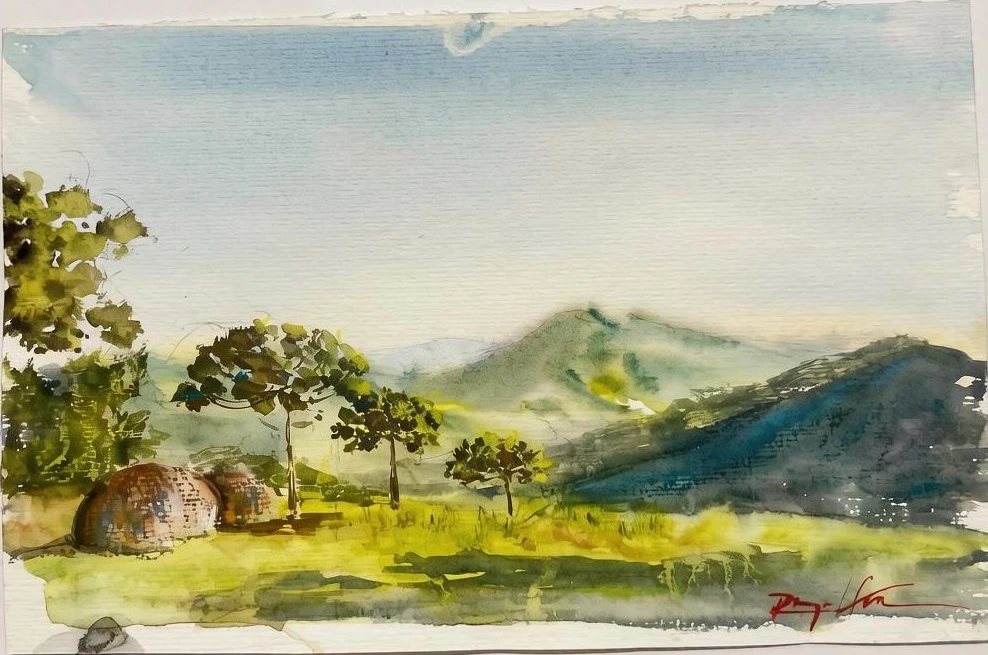
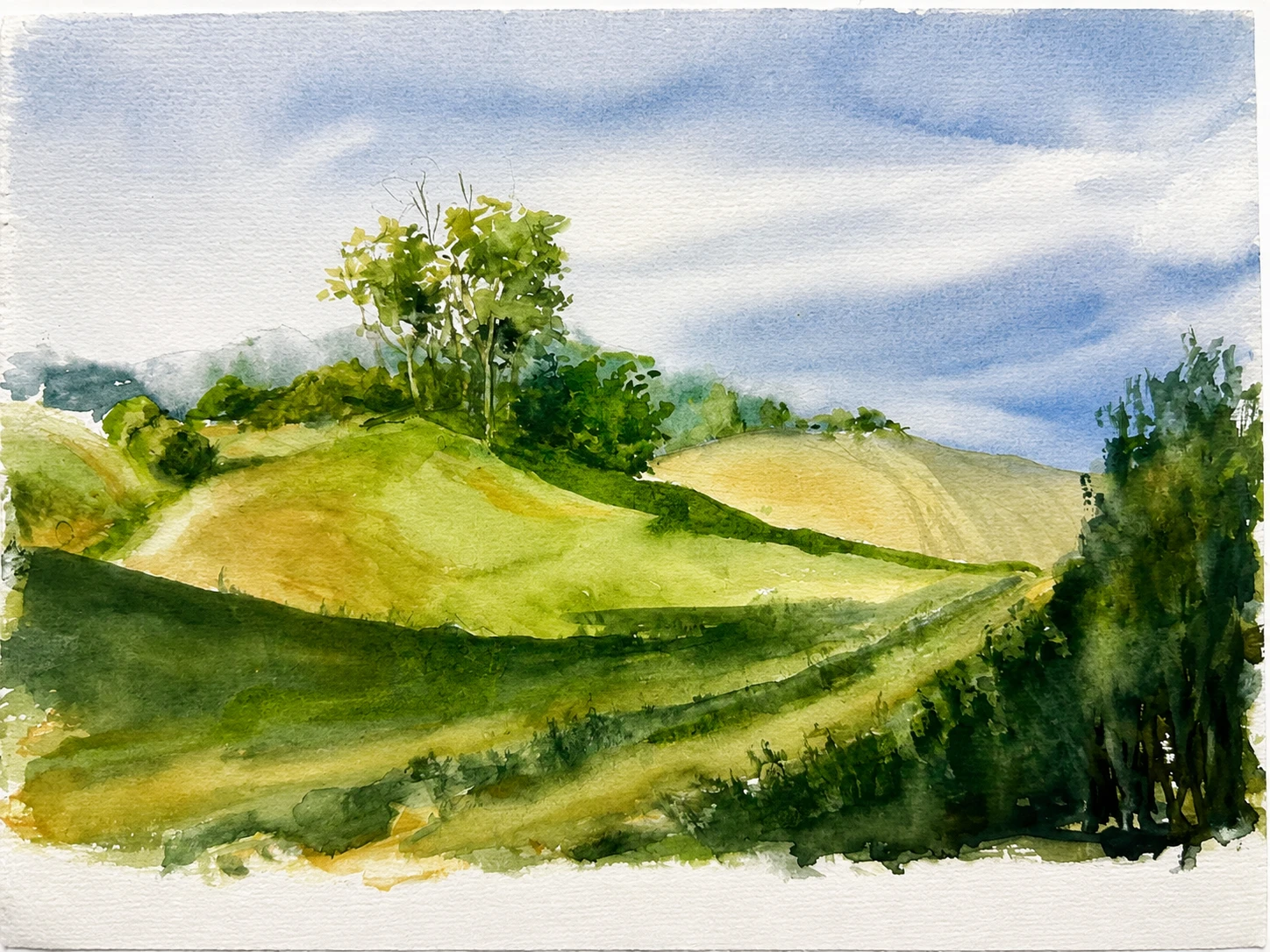
This course is designed to teach you how to paint rural landscapes in watercolor with sensitivity, clarity, and a strong focus on essential techniques. What sets it apart is its in-depth exploration of greens—you'll learn to create natural, harmonious mixtures while avoiding muddy or overly heavy results.
Throughout the lessons, we explore granulation and how it can add texture, depth, and a more authentic atmosphere to your landscapes. The course emphasizes careful observation of nature, helping you identify the larger shapes within a scene and translate them into your paintings without unnecessary complexity.
Who will find this course useful
This course is perfect for beginners looking to build a strong foundation in watercolor, as well as for intermediate artists who want to refine their technique and sharpen their observational skills.
It's especially suited for those who love nature and want to develop a consistent, enjoyable watercolor practice.
Course program
Lesson 1
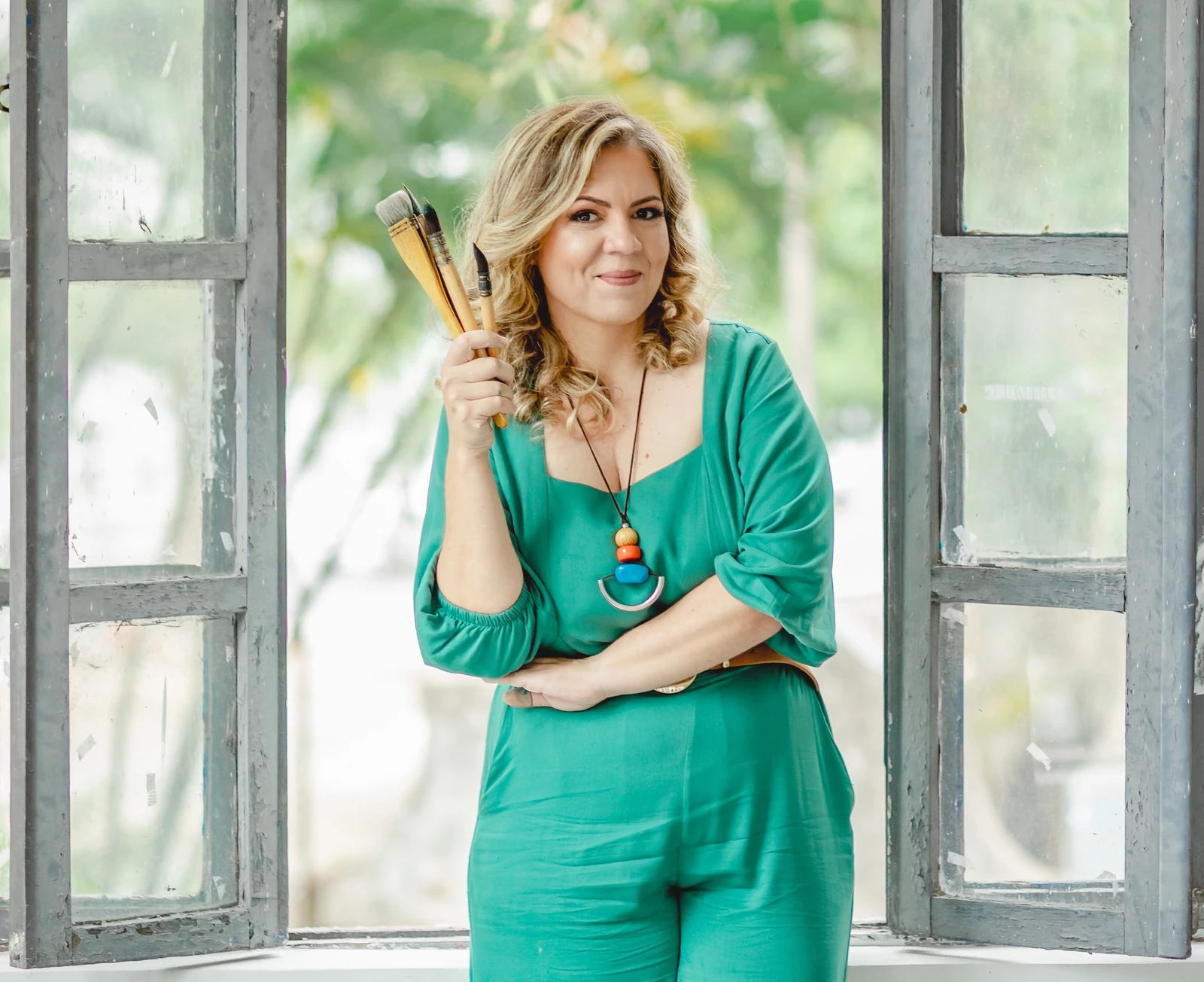
Getting to know your teacher
Basic information about the course, greeting from the teacher.
Lesson 2
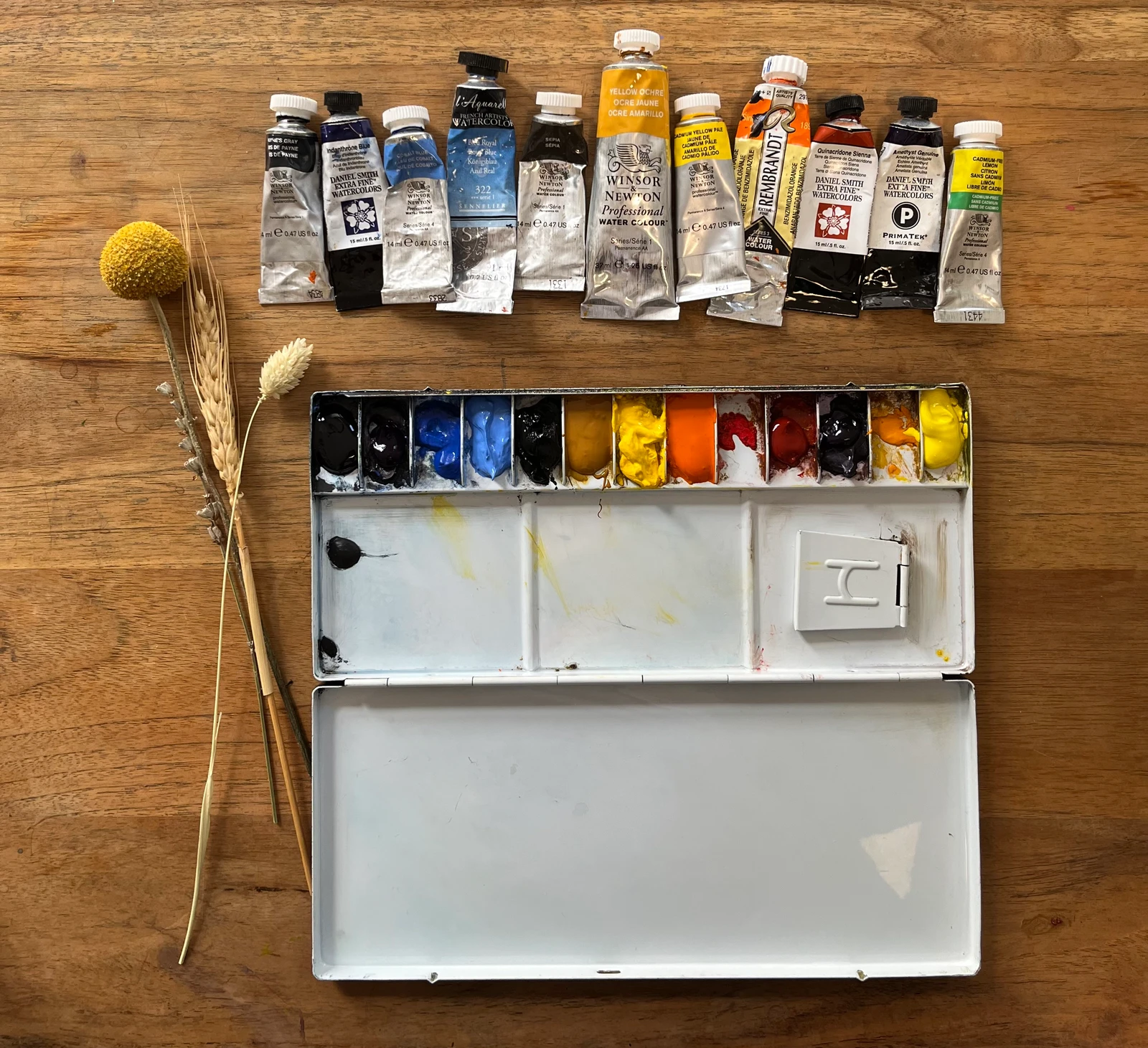
List of materials
In this lesson, I'll show you the materials you'll need throughout the course.
Lesson 3
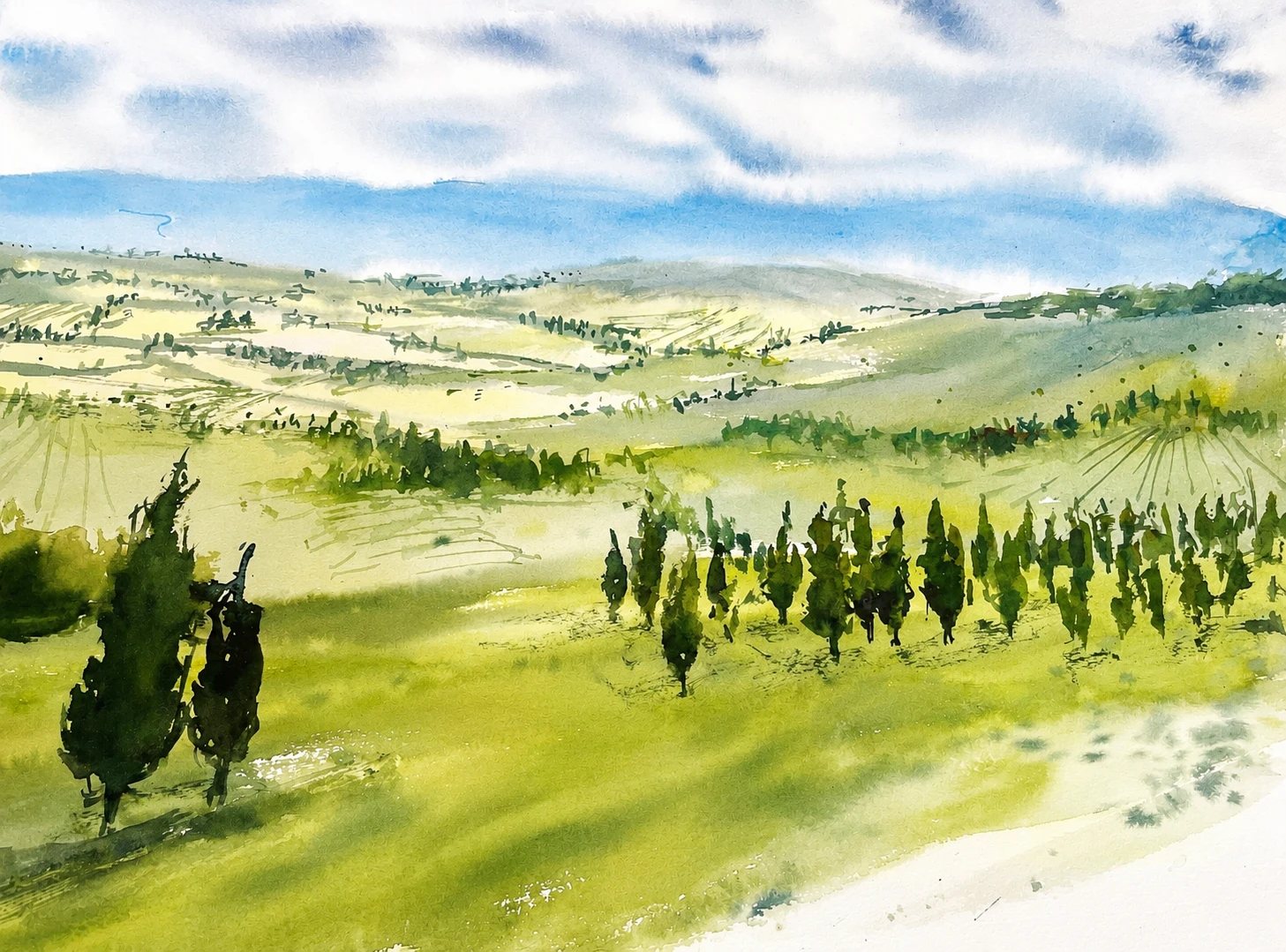
Field of Trees
Duration: 45 minutes
In this lesson, you will paint a distant Tuscan landscape while focusing on atmospheric perspective and creating depth through color and tonal value.
You will learn to:
- create smooth gradations of greens and blues to suggest distance;
- paint cloudy, overcast skies with subtle tonal variations;
- control tonal values to separate foreground, middle ground, and background;
- build a landscape without preliminary sketching, relying on color, value, and brush movement;
- suggest trees, fields, and hills using simplified shapes instead of detailed forms.
Lesson 4
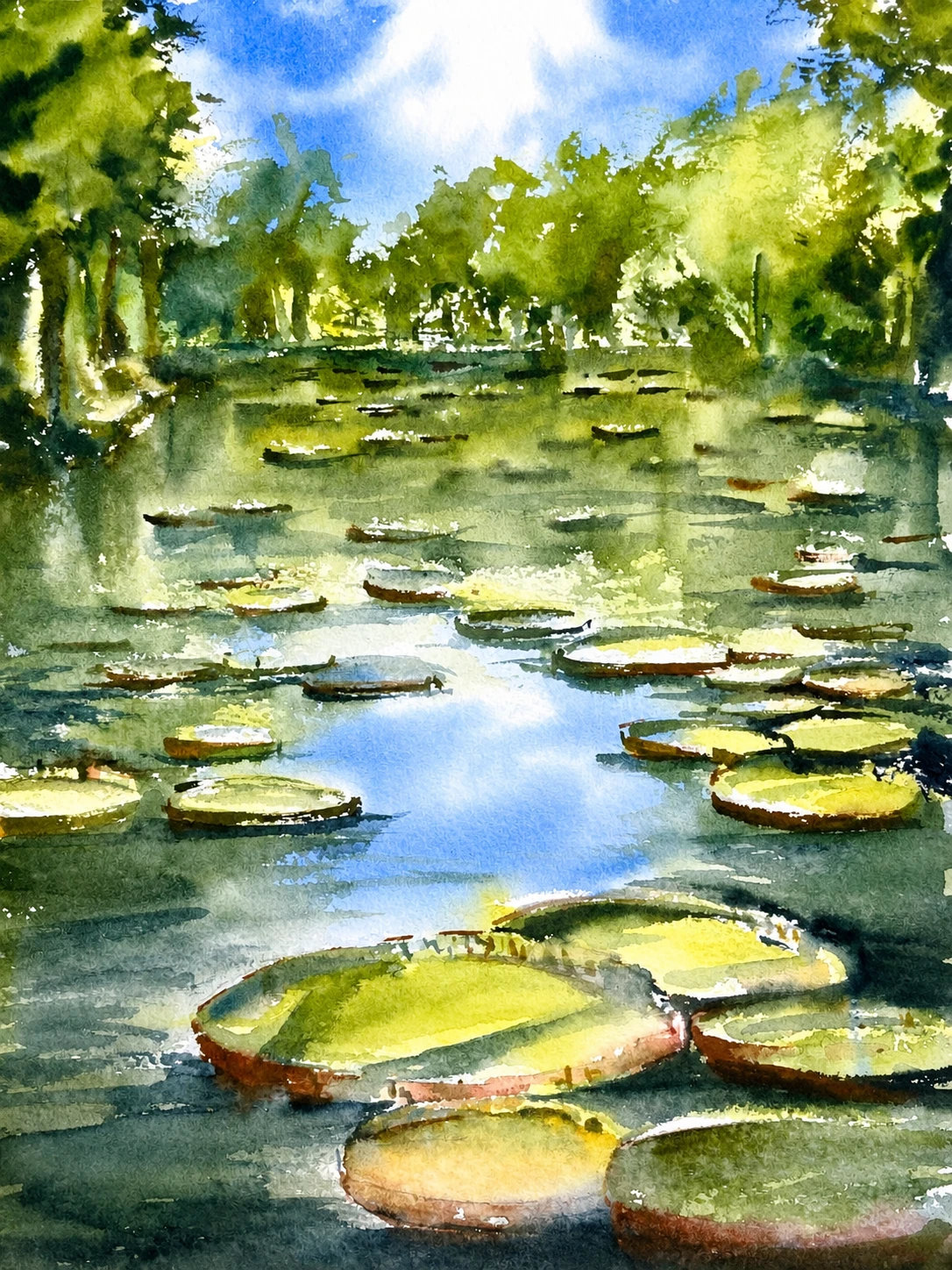
Water Lilies
Duration: 1 hour
In this lesson, you will paint water lilies while focusing on perspective, reflections, and building layered compositions on water.
You will learn to:
- create depth using spacing, scale, and overlapping shapes;
- paint realistic water reflections using color, value, and softened edges;
- construct organic forms without rigid sketching;
- balance warm and cool colors to separate water, reflections, and floating elements;
- use repetition and variation to create rhythm throughout the composition.
Lesson 5
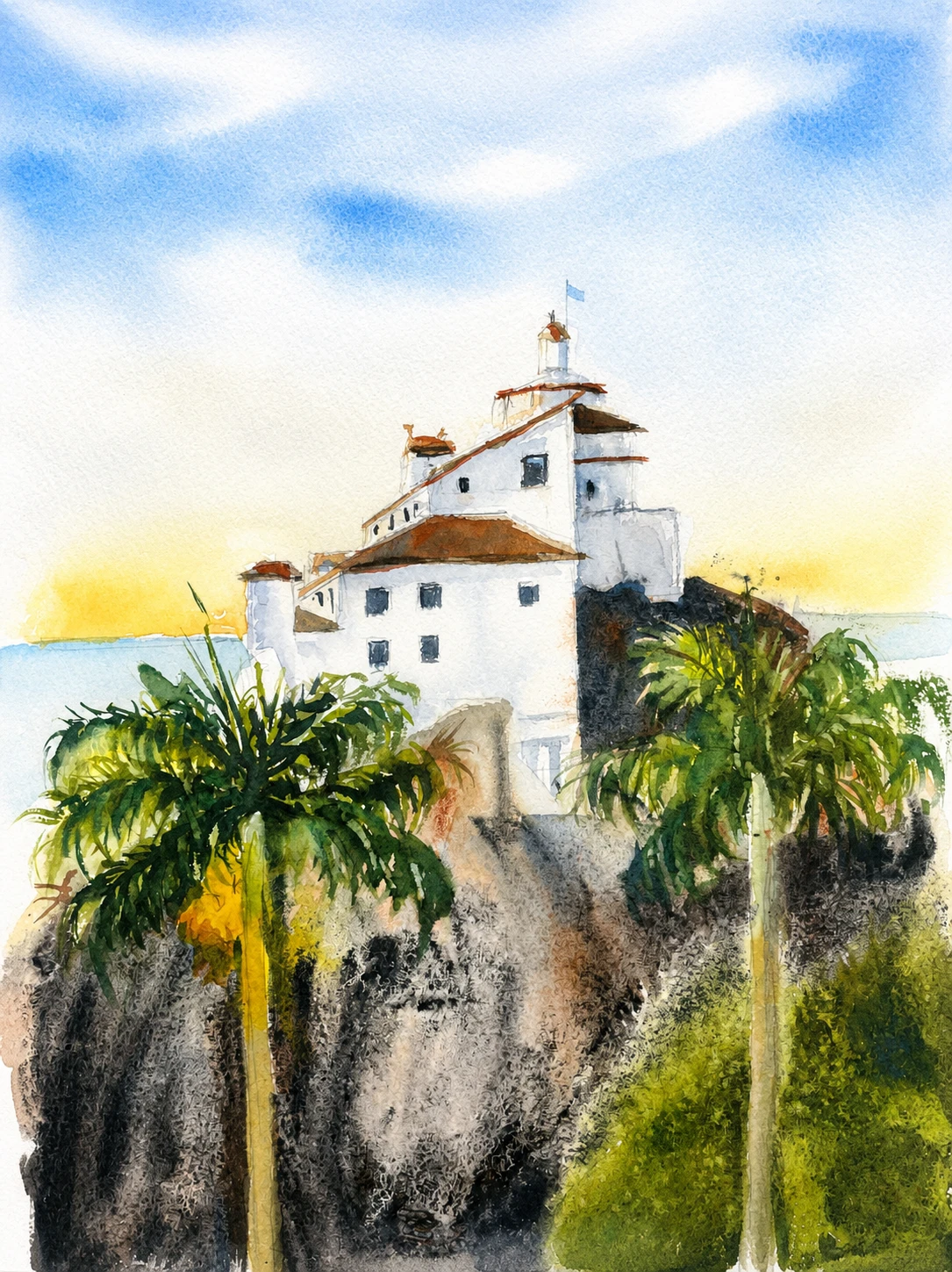
Convento da Penha
Duration: 1 hour
In this lesson, you will paint a white architectural structure set within a natural landscape, focusing on texture, tonal values, and paint density rather than detailed line work.
You will learn to:
- build white surfaces using subtle tonal variations and temperature shifts;
- control tonal values to describe light and shadow on architectural forms;
- use paint density to create a sense of solidity and material;
- create texture through layered washes while balancing hard and soft edges;
- simplify architectural forms while preserving volume and structure.
Lesson 6
Clean Color Mixing
In this lesson, I'll show you how to avoid muddiness and create bright, clear landscapes.
Lesson 7
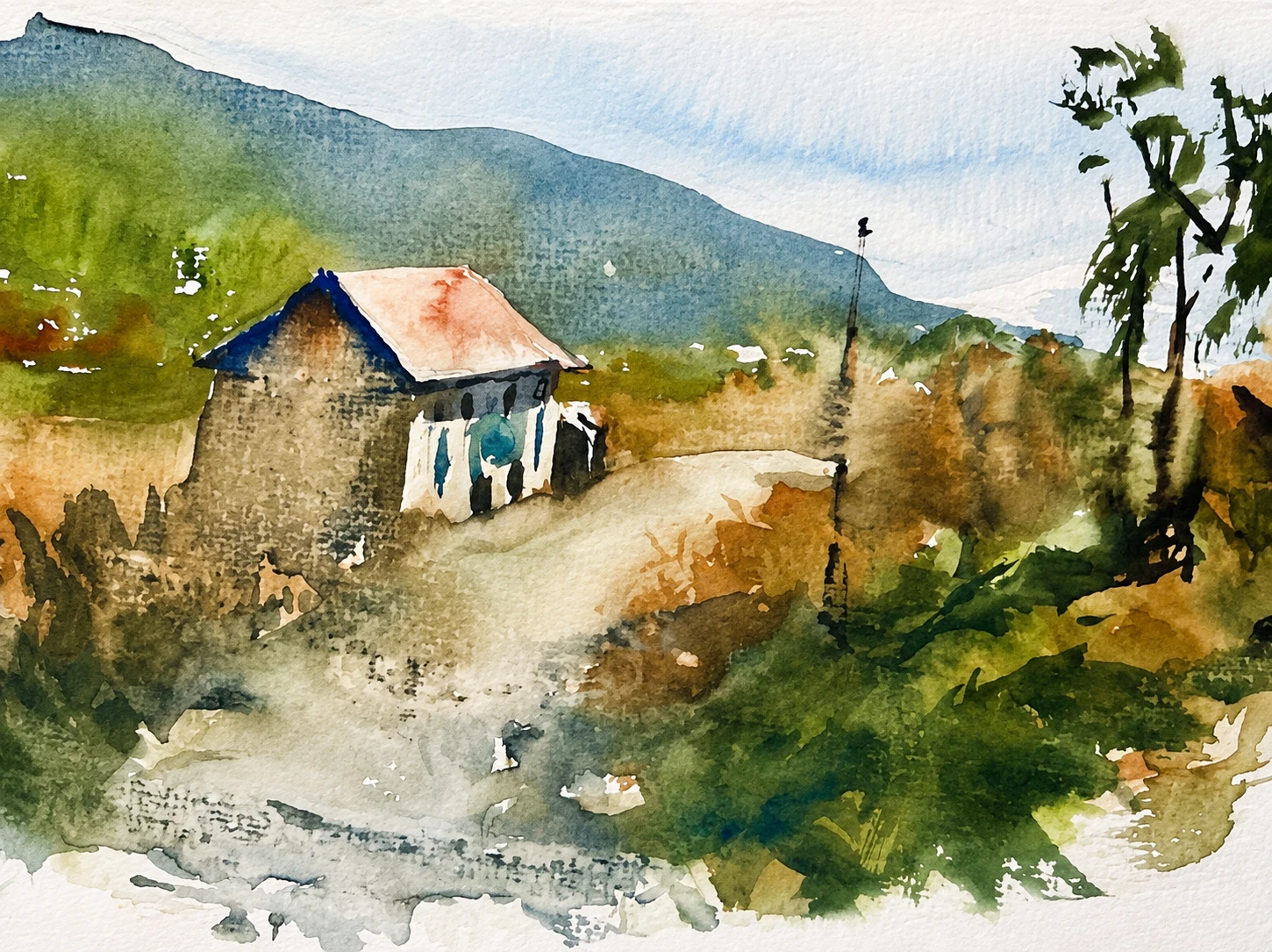
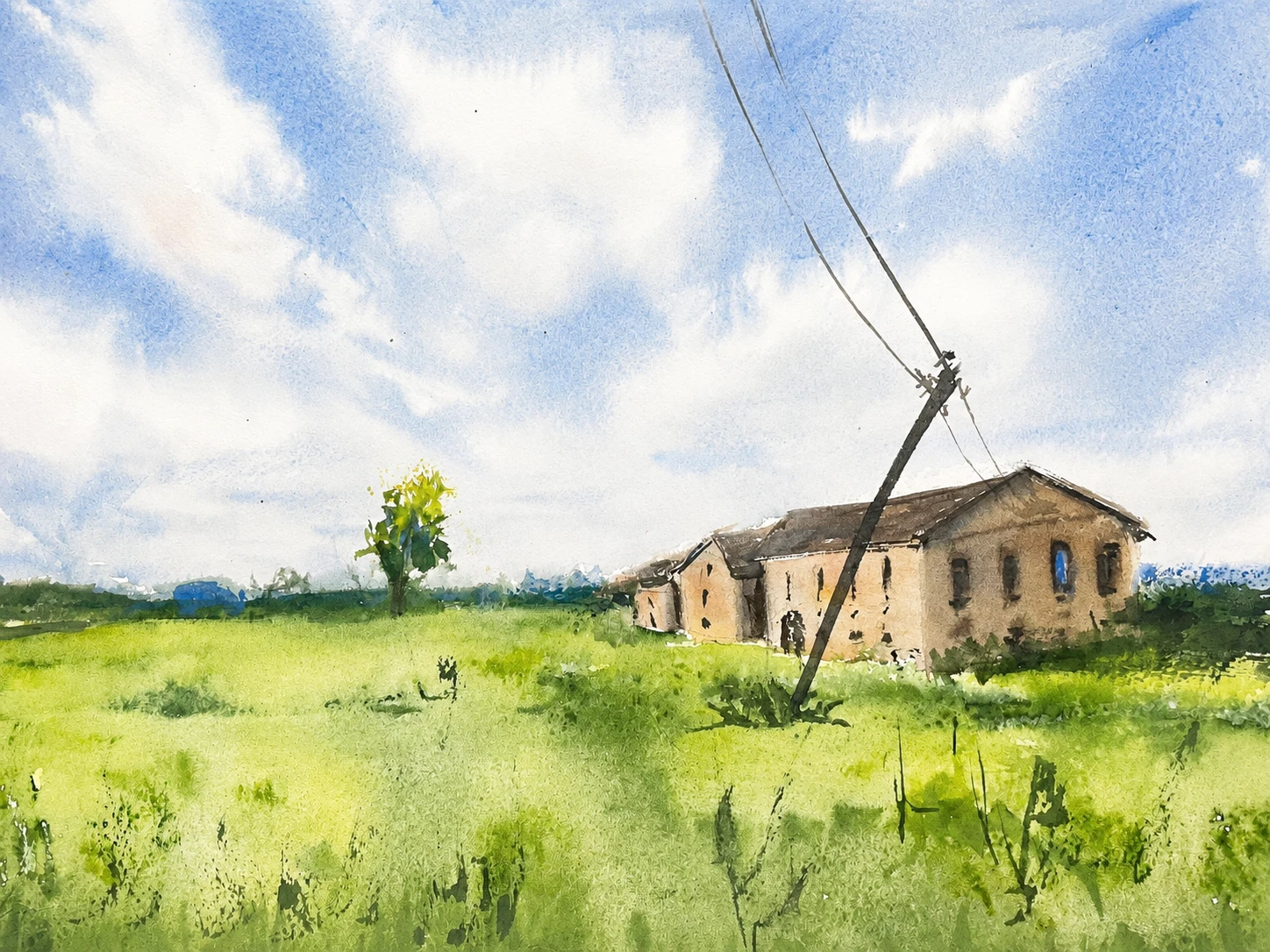
Country House Landscape
Duration: 1 hour 30 minutes
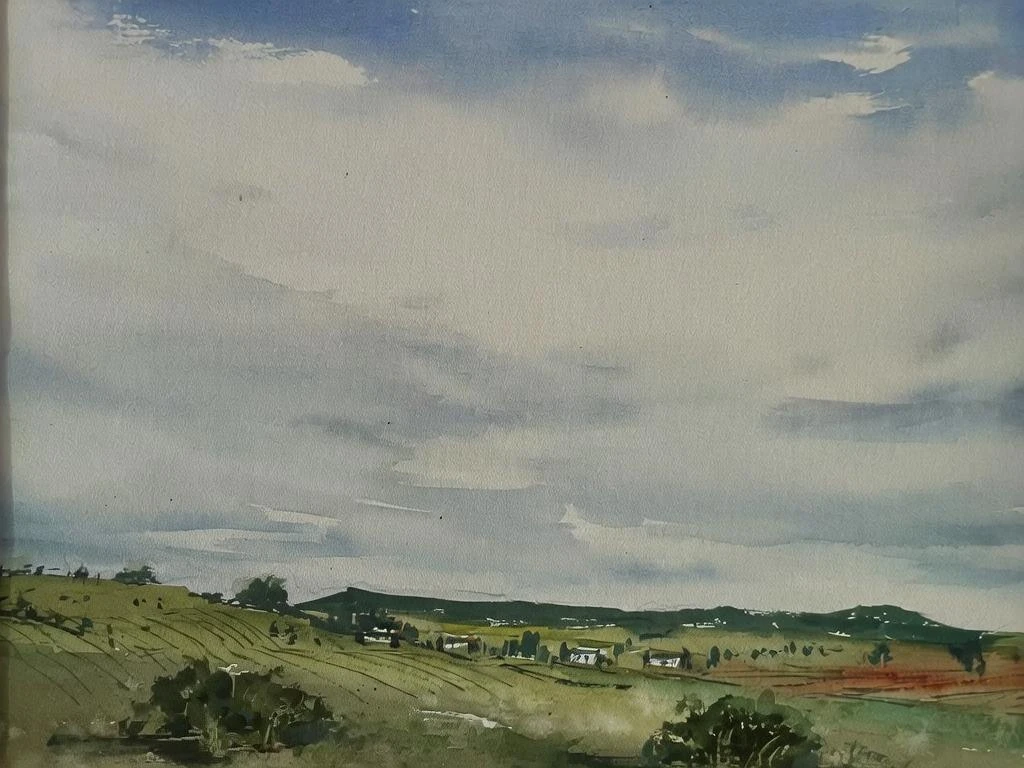
In this lesson, you will explore how to paint an atmospheric landscape in watercolor, focusing on greens, sky construction, and perspective.
You will learn to:
- mix and control different shades of green to create depth and variation;
- paint expressive skies with soft transitions and subtle cloud formations;
- create texture in grass and ground using wet-on-wet and dry brush techniques;
- suggest buildings, vegetation, and distance without overworking details;
- use color, value, and edge control to guide the viewer's eye through the composition.
Lesson 8
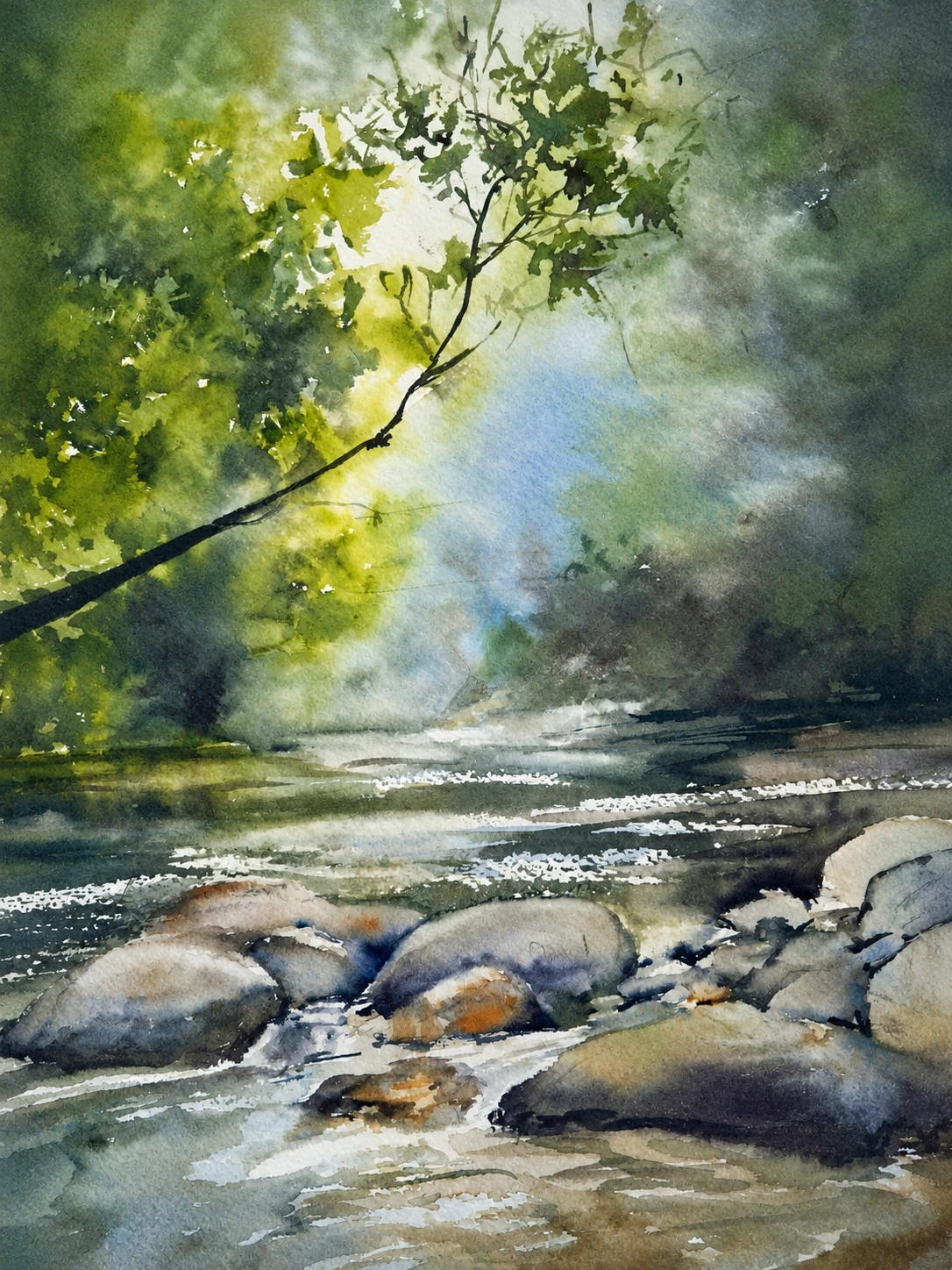
Forest Stream
Duration: 1 hour 15 minutes
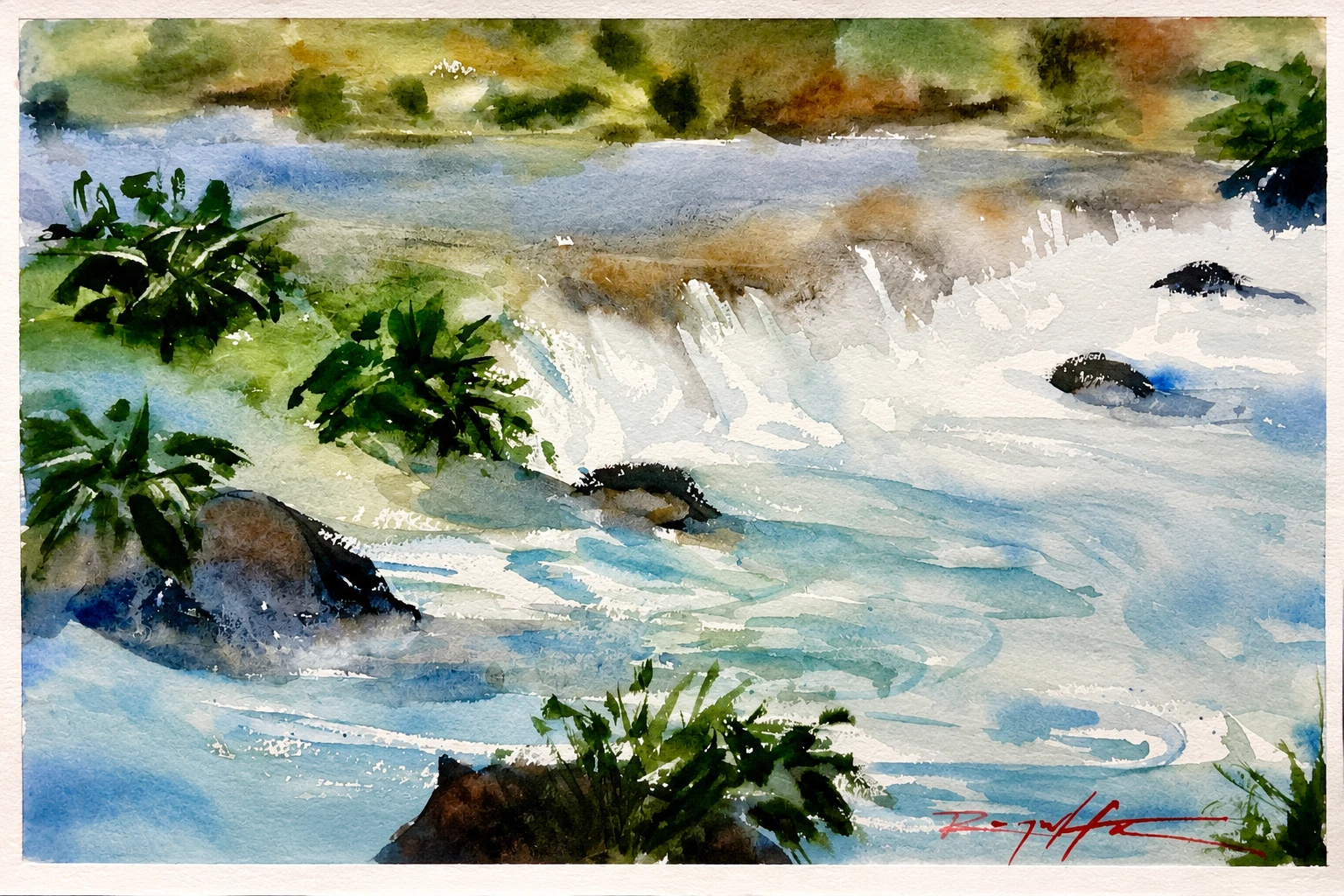
In this lesson, you will learn how to paint a peaceful forest stream while focusing on depth, water movement, and natural textures.
You will learn to:
- paint waterfalls and splashes using timing, pigment control, and paper texture;
- work with dry and semi-dry brush techniques to add texture and detail;
- paint rocks and stones using value shifts instead of outlines;
- build vegetation using layered greens while maintaining freshness and transparency;
- balance soft washes with selective areas of contrast and definition.
Lesson 9
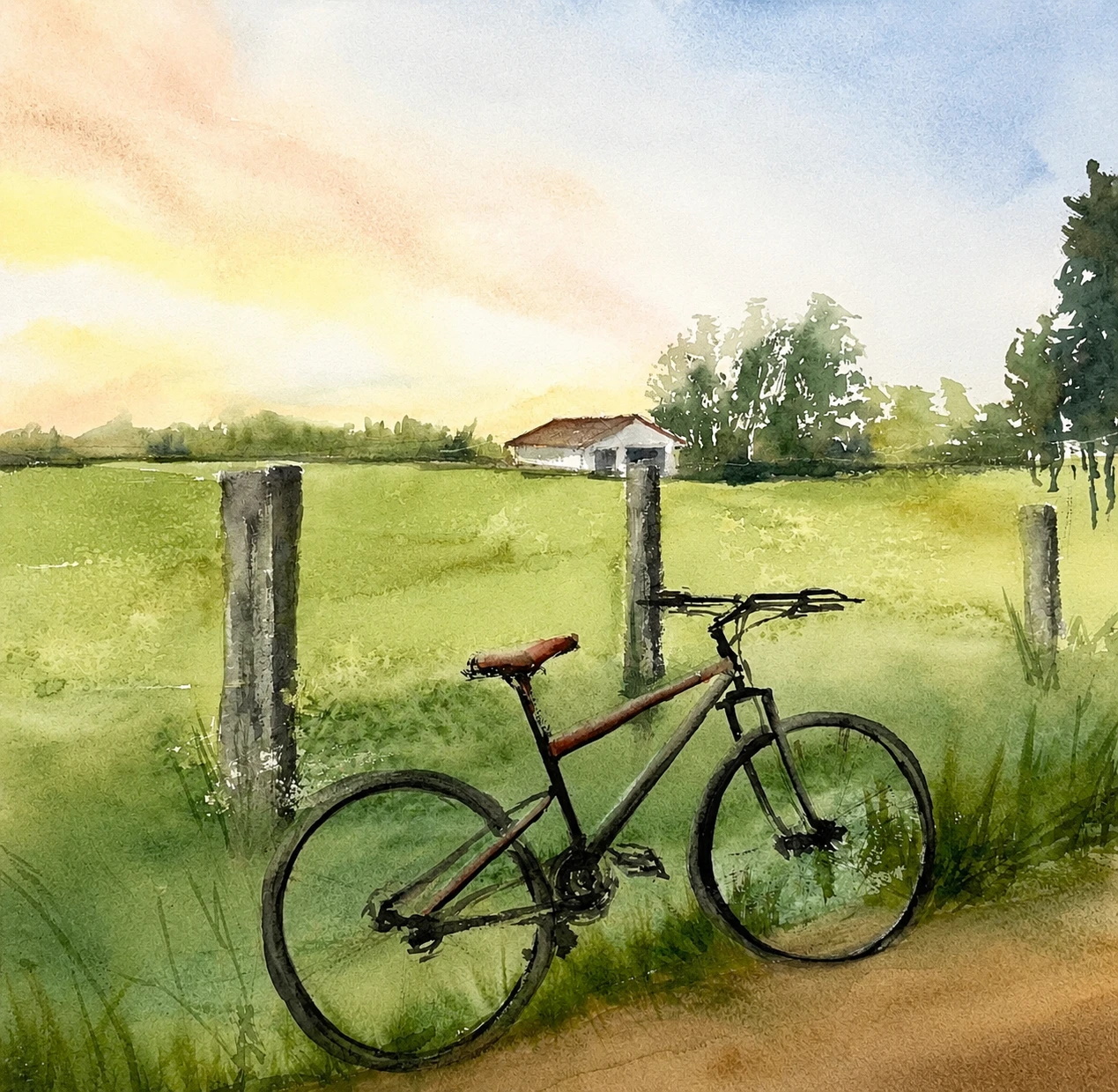
A Bicycle in the Field
Duration: 1 hour 15 minutes
In this lesson, you will paint a countryside scene featuring a bicycle as the focal point while using simplified shapes, expressive brushwork, and atmospheric perspective.
You will learn to:
- place elements of different sizes to create depth and perspective;
- simplify complex subjects while keeping them visually convincing;
- create a sense of scale and distance through placement, value, and color temperature;
- use rhythm and texture through varied brushstrokes in grass and vegetation;
- work with layered greens to create richness and movement throughout the landscape.
Lesson 10
How to Find Subjects for Your Paintings
In this lesson, I'll show you how to choose a subject for your painting and select the best reference images.
Lesson 11
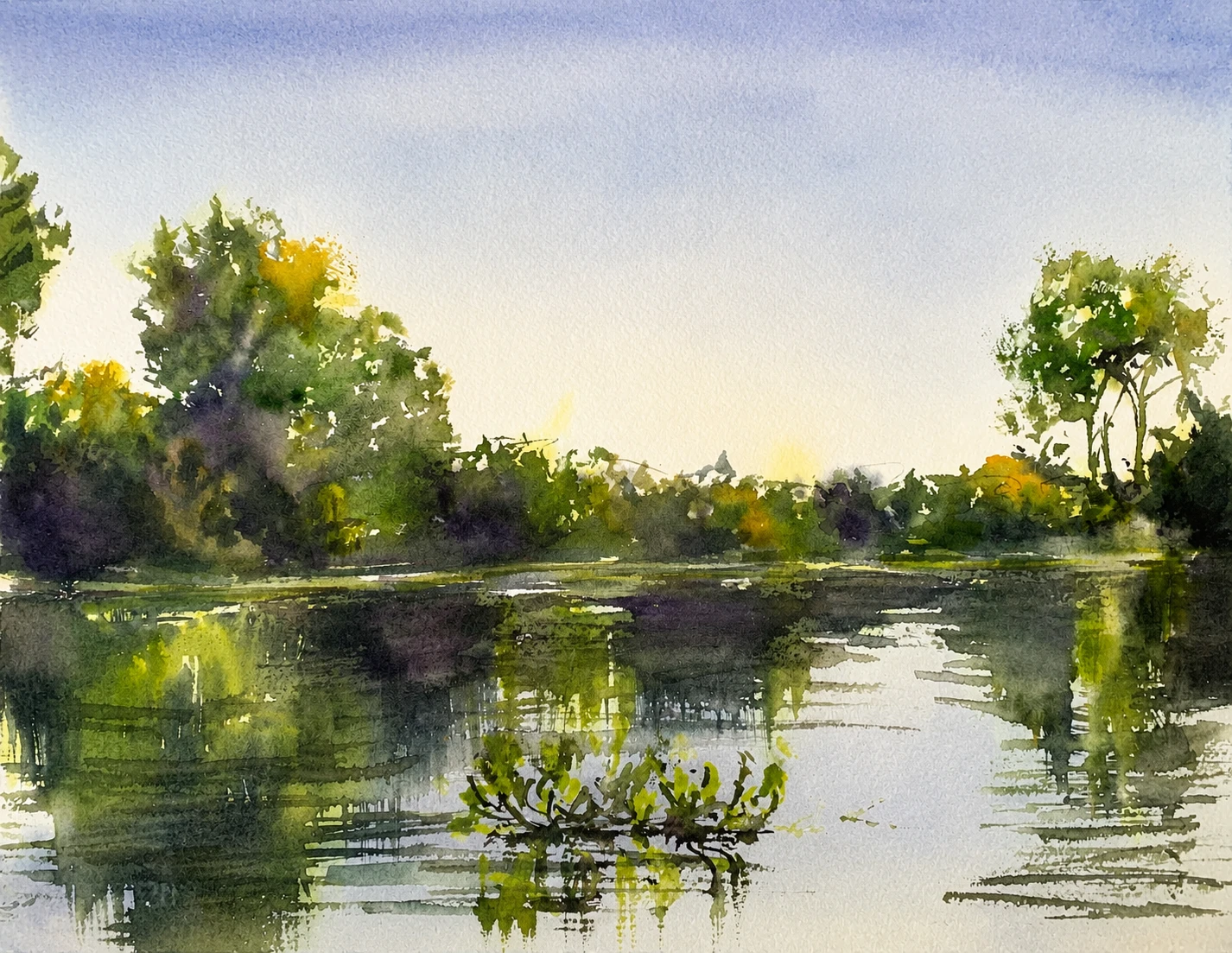
River with Vegetation
Duration: 45 minutes
In this lesson, you will create a watercolor landscape inspired by the Pantanal river environment, focusing on color harmony, tonal contrast, and depth.
You will learn to:
- apply violet tones for deep shadows and orange tones for illuminated areas;
- use green as a transitional color to balance warm and cool areas in the vegetation;
- create realistic water reflections using horizontal brushstrokes and softened edges;
- control pigment dilution to achieve tonal variation and transparency;
- simplify natural elements while maintaining realism and atmosphere.
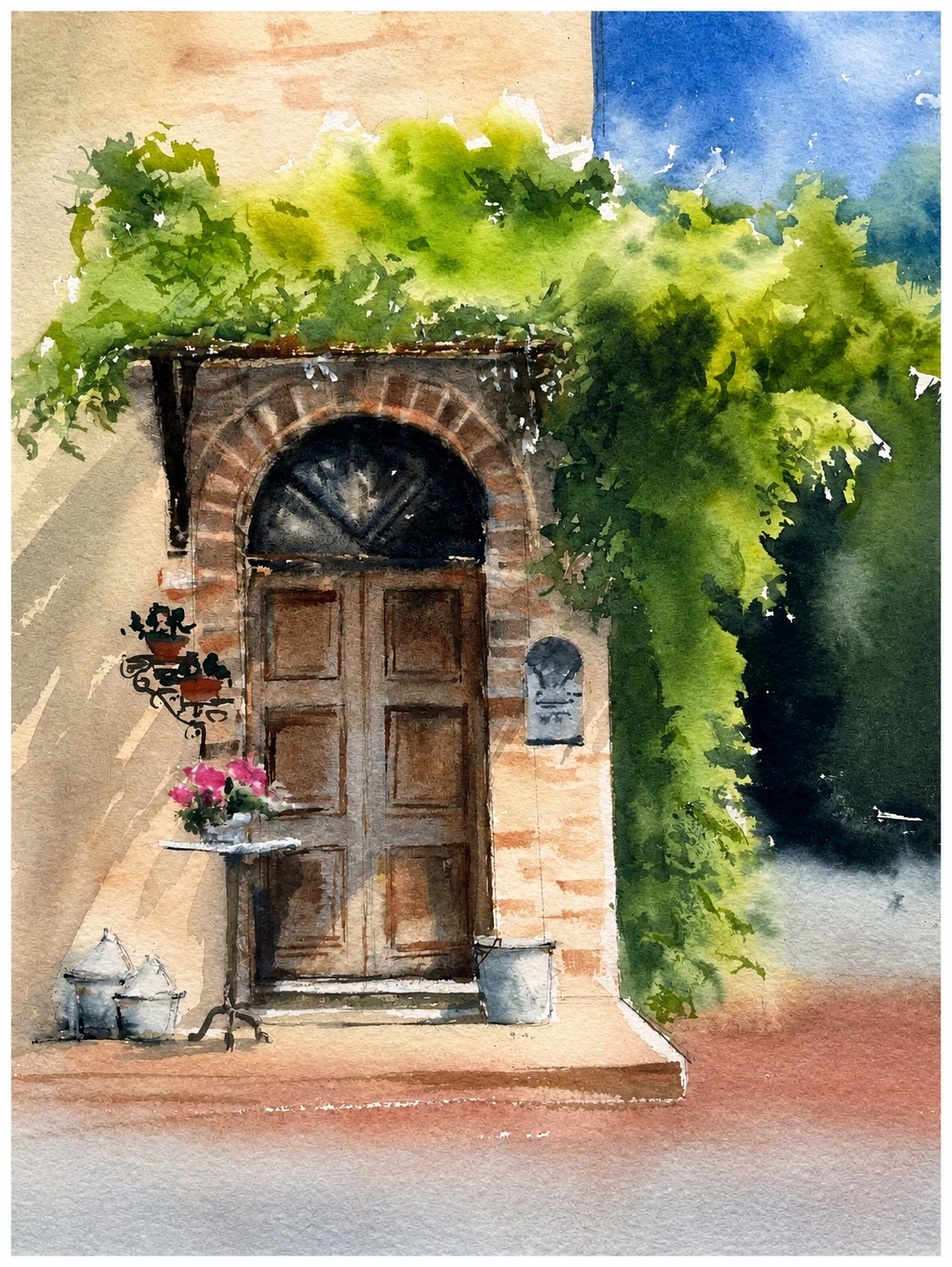
Lesson 12
Rustic Door
Duration: 1 hour 30 minutes
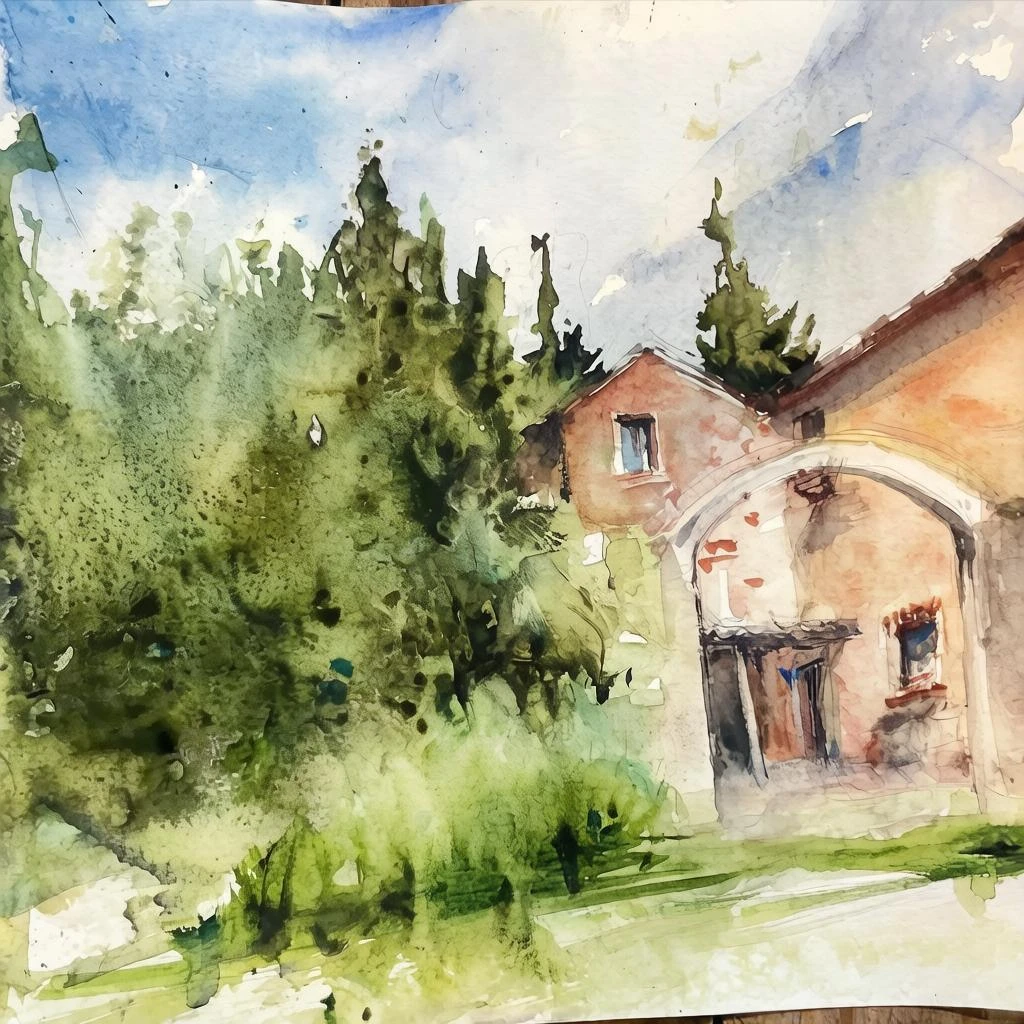
In this lesson, you will paint a rustic architectural subject surrounded by vegetation while focusing on texture, light behavior, and layered color.
You will learn to:
- create foliage textures using expressive and varied brushstrokes;
- understand and apply cast shadows and form shadows accurately;
- build surfaces through glazing and layered color application;
- balance loose washes with controlled details;
- enhance realism while keeping the painting fresh and spontaneous.
Lesson 13
Course Conclusion
We've reached the end of the course. Let's review everything you've learned and discuss how to continue developing your artistic skills moving forward.
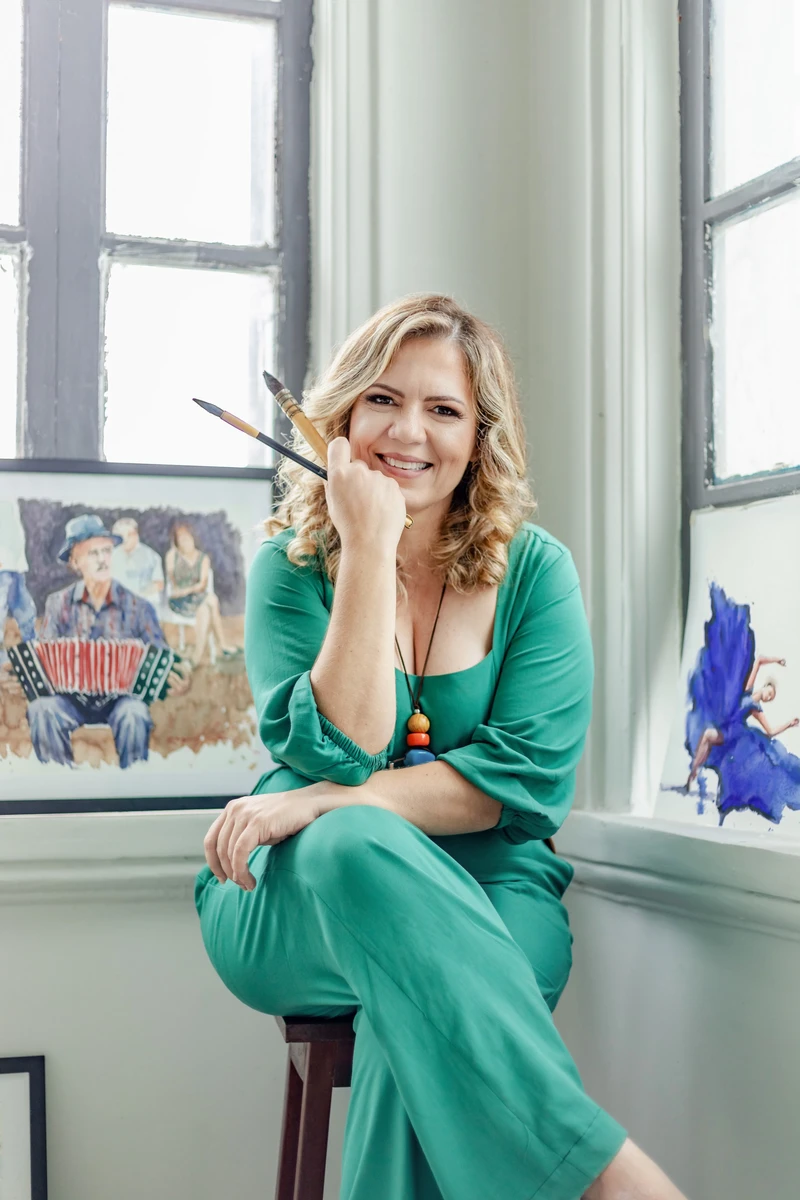
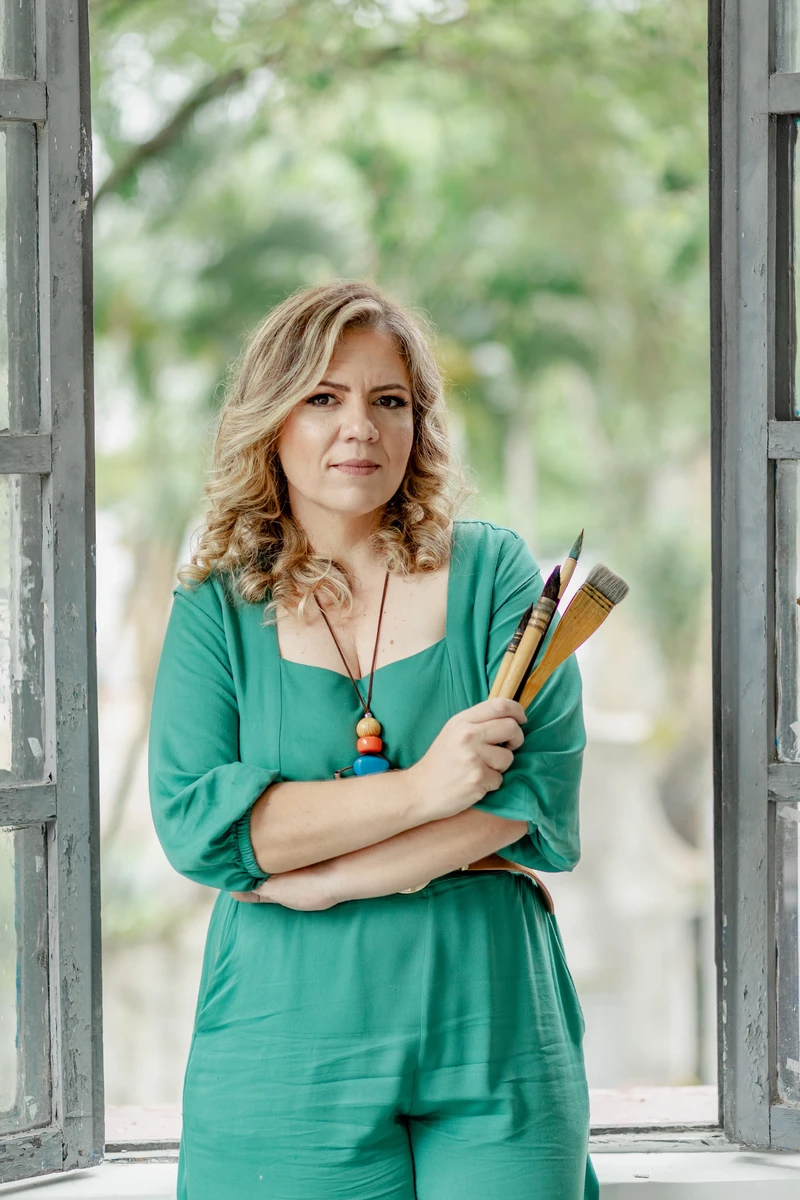
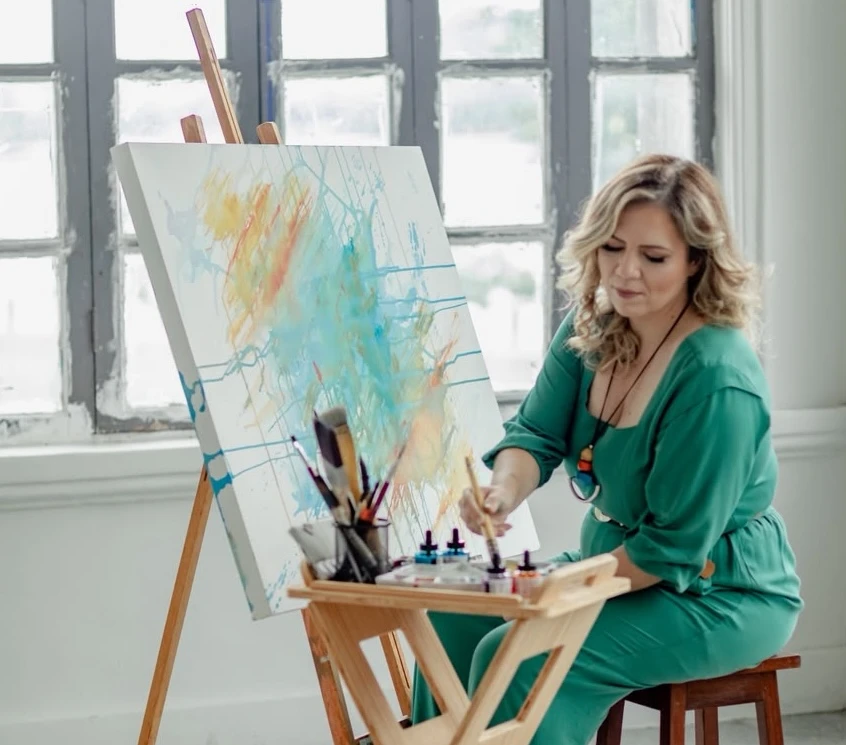
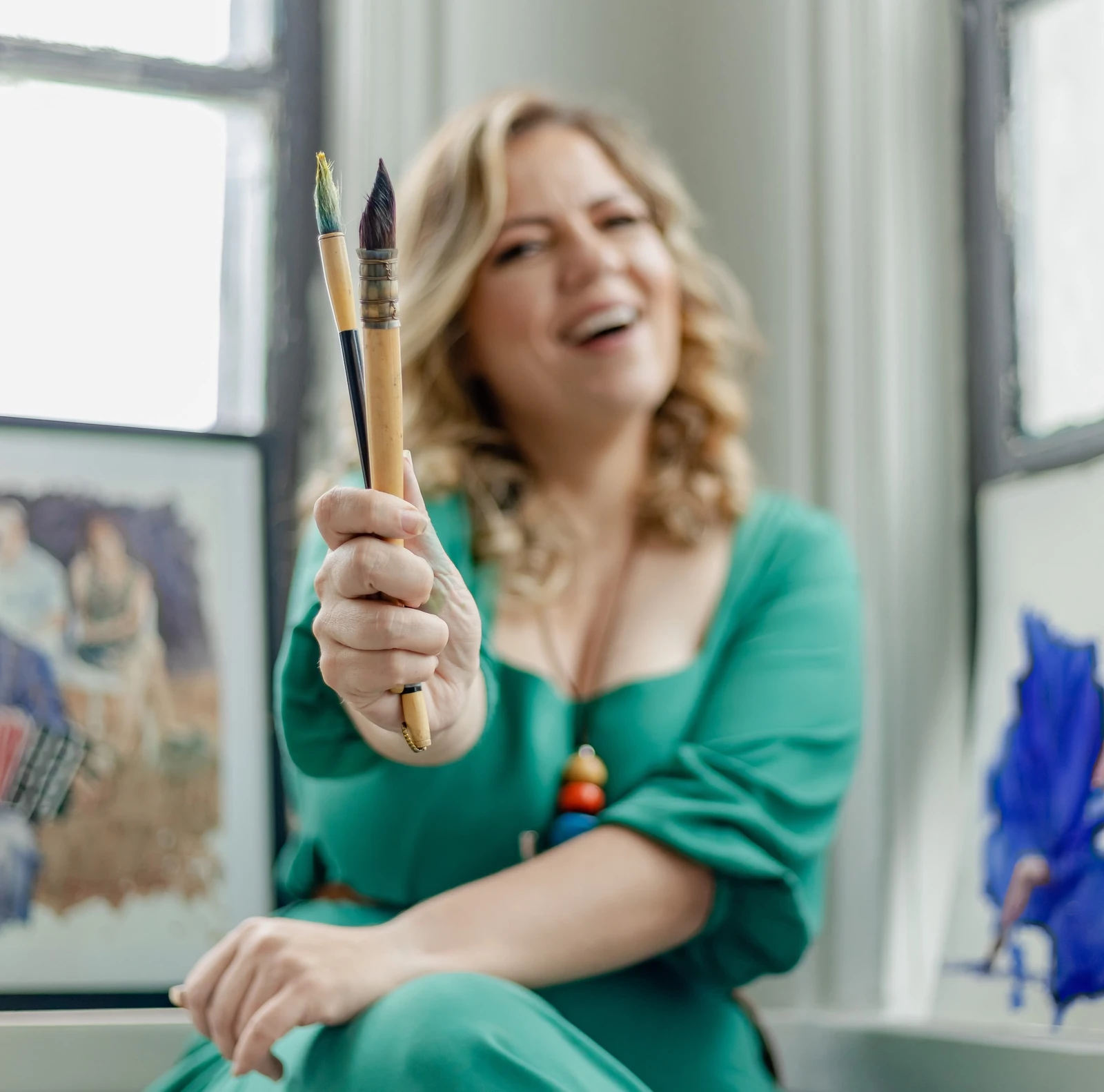
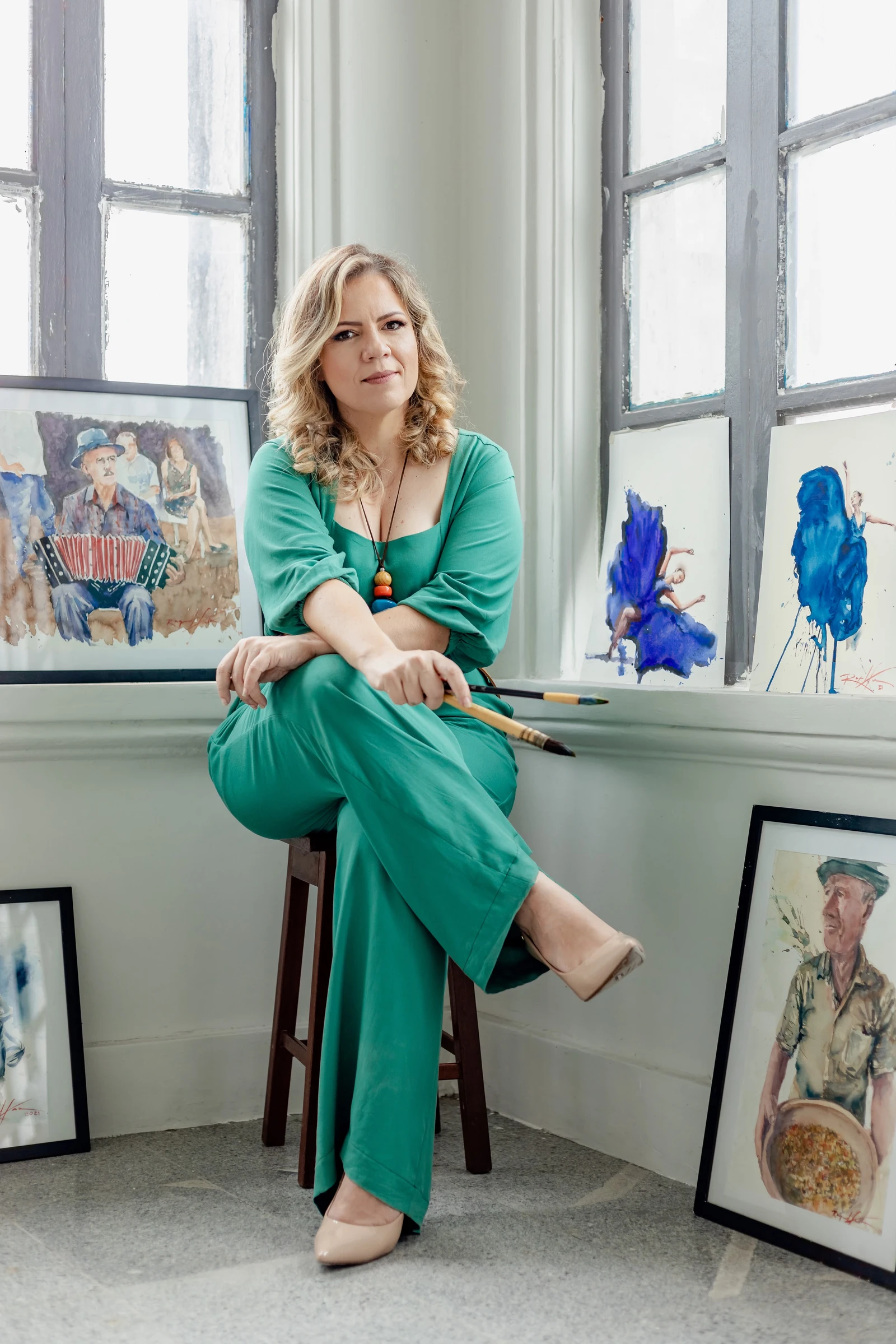
Raquel
FalkWatercolor artist
 A watercolor artist with a strong academic background in visual arts.
- Graduated from the Faculty of Visual Arts at the Federal University of Espírito Santo in 2008.
- Work recently exhibited at the Louvre.
- Brings 15 years of experience teaching art and sharing watercolor techniques with students.

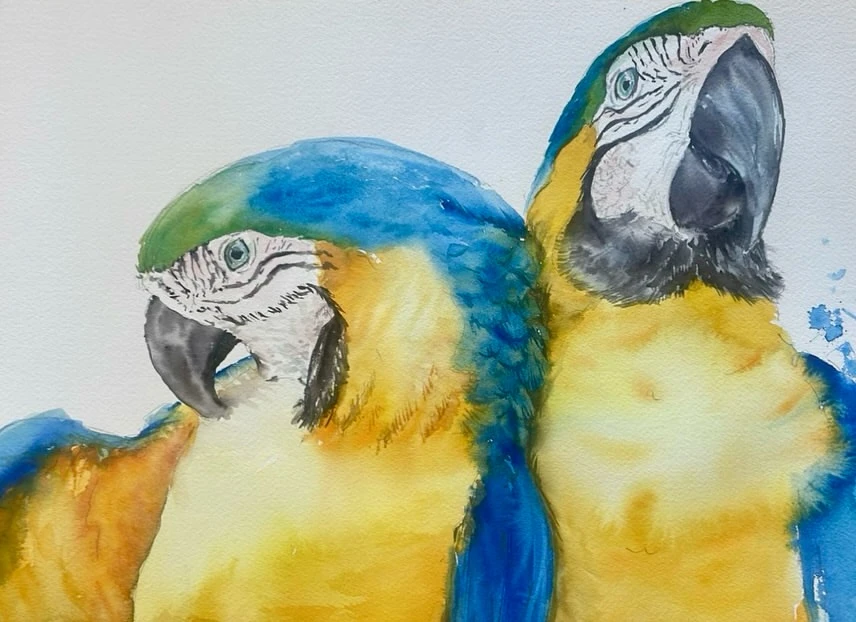
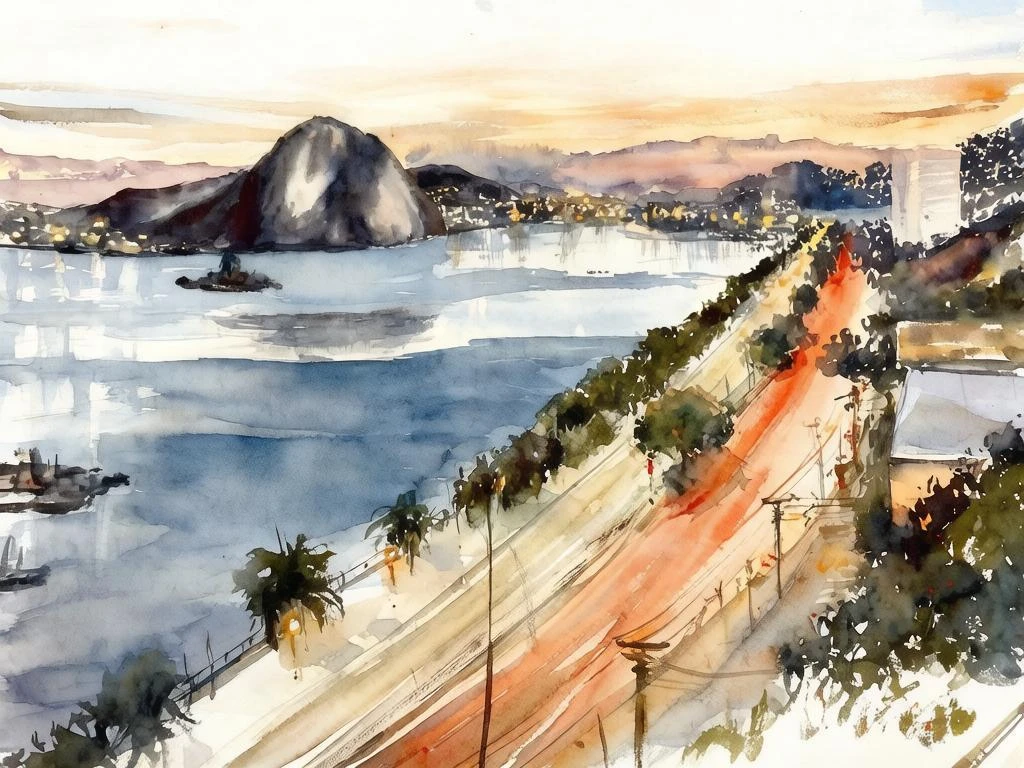
Instructor'sWorks
Course materials
1. Paper:
- Watercolor paper (100% cotton, cold press or rough).
- Cold press.
- Paper size: A4 (21 × 29.7 cm), 30 × 30 cm, A3 (29.7 × 42 cm).
2. Brushes:
- Round brushes (various sizes);
- Large flat brushes;
- Medium flat brushes;
- Large round brushes;
- Medium round brushes;
- Small round brushes;
- Flat brush;
- Liner (rigger) brush for details;
- Textural brushes (optional).
3. Other materials:
- Water container;
- Mixing palette (ceramic or plastic);
- Paper towel or cloth.
- Pencil (2B);
- Eraser.
4. Paints:
- Green Gold;
- Lemon Yellow;
- Sap Green;
- Violet;
- Orange;
- Cobalt Blue;
- Ultramarine Blue;
- Royal Blue;
- Orange Vermilion;
- Red Light;
- Turquoise (used subtly);
- Burnt Sienna;
- Carmine Red;
- Indigo;
- Lavender;
- Burnt Umber;
- Cadmium Yellow;
- Carmine;
- Earthy Red Light (Daniel Smith);
- Cerulean Blue;
- White (for subtle highlights, if desired);
- Opera Pink.
Pricing

- 13 lessons: theory + practice + developmental exercises
- 8 natural landscapes
- Machine translated subtitles: English, German, French, Italian, Spanish, Greek, Polish, Portuguese, Hungarian, Chinese, Indonesian
- Course Unfreeze
- The opportunity to watch the analysis of other participants' artworks
- Access to course materials without time limits
- Review of your artworks and answers to questions in the comments for 60 days from the start of the course
- Personal one-hour online consultation with a course expert
- +20 bonus dollars! Can be used when purchasing a course at the next workshop. Valid for 3 months
FREQUENTLY ASKED QUESTIONS
- I can't draw at all. Should I take the course?
-
Absolutely. The course is suitable for complete beginners. The course is designed so that it starts with simple paintings and then progresses to more complex ones, allowing you to smoothly integrate into the process and achieve strong results!
The course will also be beneficial for experienced artists. You will further refine your technique and improve your visual perception and observational skills.
- How is the feedback organized?
-
At the end of the lesson, you will upload a photo of your work. The teacher will have the opportunity to leave textual, graphic (annotations on the drawing), as well as audio comments on your work.
At the bottom of each lesson, there will be a comment section where you can ask any questions related to the learning process.
- How long will the training take?
-
If your plan does not include feedback, the course duration will depend on the pace at which you complete the lessons.
If your plan includes feedback, you will receive instructor support for two months from the date you activate the course.
Overall, I recommend taking the course at a relaxed pace. Enjoy the process more!
- I am 67 years old, will I be able to learn to draw such illustrations in the course?
-
It's never too late to learn to draw. In our school, 30% of students are over 50 years old. They enjoy drawing, developing their skills, creative thinking. They enjoy painting, developing new skills, and staying creatively active.
Feedback
Didn't find the answer to your question? Message us on WhatsApp or Telegram.